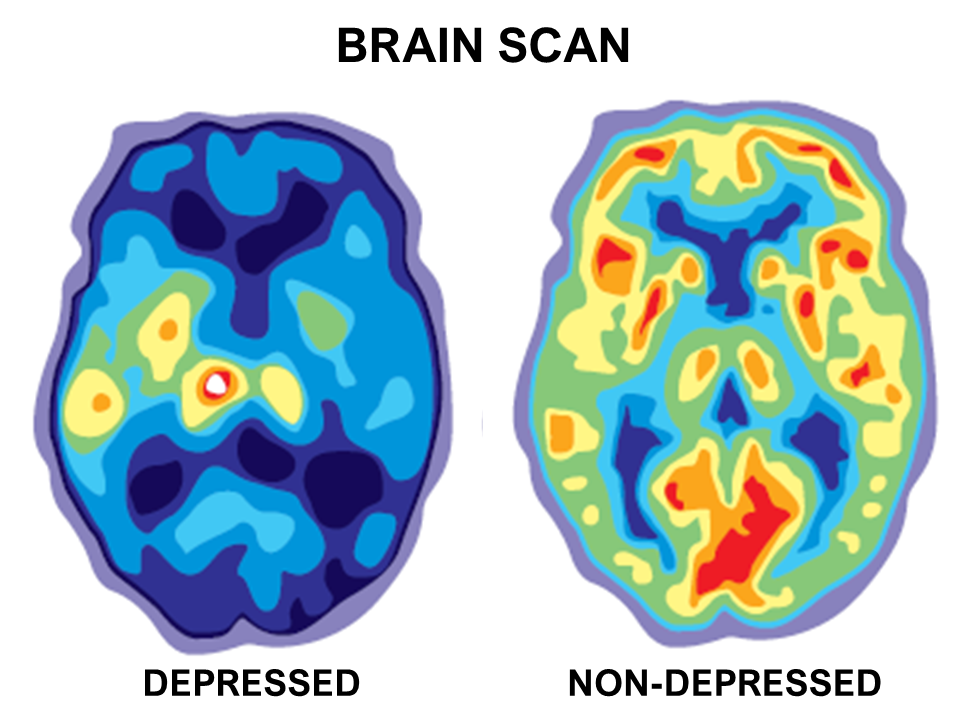
PET brain scans
Depression can be diagnosed without brain scans. However, differences in brain scans of depressed versus non-depressed individuals clearly illustrate underlying health factors contributing to clinical depression. It is not just a psychological disorder. It is a health condition characterized by decreased metabolic activity in the brain.
Therefore, talk therapy alone will not typically cure an individual who is clinically depressed. While talk therapy has purpose and may help, more intervention is needed to achieve true remission from depression. Anti-depressant medications are usually the first line of defense. These medications may work for some people, but many others have Treatment Resistant Depression (TRD) which means anti-depressants are not effective in the long term. Yet another sub-group of depression sufferers experience intolerable side effects due to medication therapy. This is because anything that is swallowed or injected may impact unintended areas of the body.
For these reasons, our clinic specializes in a truly advanced technology called TMS (Transcranial Magnetic Stimulation). TMS specifically treats the brain to achieve significant and lasting results.
TMS is well studied, and FDA-cleared. It has been proven to be extremely safe and effective even for those with TRD (Treatment Resistant Depression) and/or people who have been chronically depressed for years or even decades.
TMS targets the underactivity of the brain by delivering magnetic pulses that can pass through the skull to directly stimulate brain neurons. This magnetic energy is nothing like a refrigerator magnet or a bracelet to prevent motion sickness. TMS technology delivers medical strength magnetic pulses in a sequence specifically engineered to treat the brain. These magnetic pulses basically speak the language of the brain.
The TMS stimulation increases neural activity and promotes the release of neurotransmitters such as serotonin and dopamine which are typically low in individuals struggling with depression. Neural networks are re-established through a process known as neuroplasticity, and depression symptoms fade away. Complete remission is the goal, and it is very possible.
Are you wondering about side effects of TMS? It is hardly worth mentioning. TMS feels like tapping or vibration on the scalp where the TMS coil is placed. A small percentage of patients may have a slight headache during a TMS treatment. We have found this to be rare, and typically only occurs on the first treatment. Our patients find it to be comfortable and even relaxing.